
Marble - Black
ASTONESA MONOLITH
Black Algerian marble — one decisive surface, and the room is finished.
Stones in this collection


Marble · YMZ-MRB-ANR-004
Atlas Noir
A true black ground with fine white veining that reads as light on water.
Marble · YMZ-MRB-DGR-011
Djurdjura Graphite
Charcoal rather than black — the dark stone for rooms that still need daylight.
Marble · YMZ-MRB-MZI-012
M'Zab Ink
A black that turns blue under cold light, with almost no veining at all.
Monolith is the collection that makes the decision for the room.
Black marble does not sit alongside a scheme; it sets the centre of gravity and lets everything else arrange itself around it. That is a strength and a constraint, and we sell it as both — for single deliberate surfaces, a reception desk, a stair, a bar front, a bathroom read as one piece, rather than spread thin across a floor plate where the drama turns into noise. Bookmatched from a single block, it will be the most photographed surface in the building.
The collection at a glance
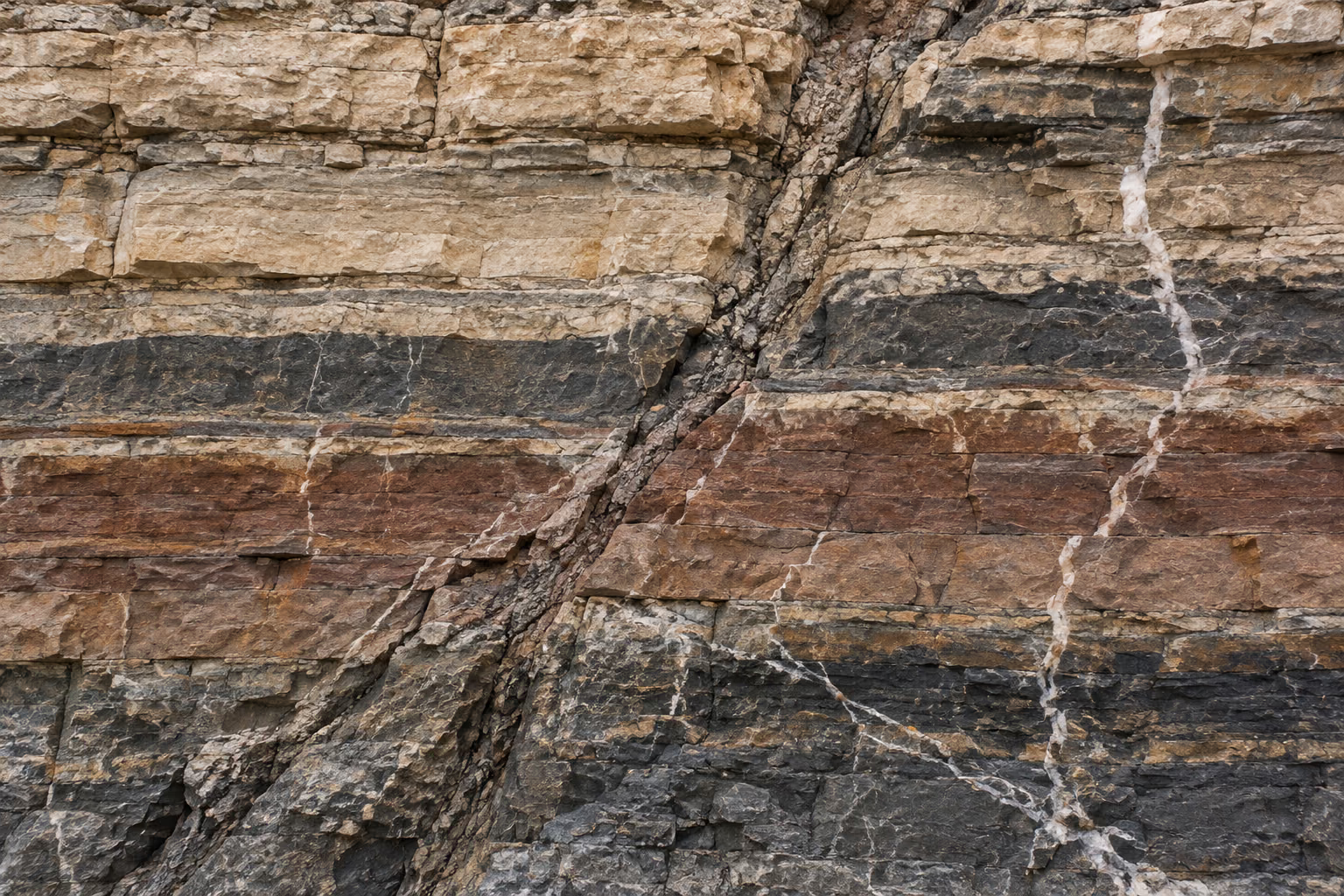
Where the dark stone comes from
The ancient crystalline massifs of southern Algeria and the dark carbonate beds of the north are geologically unrelated and produce two different kinds of black: one crystalline, fine and uniform, the other dense and bitumen-rich with white calcite tracery running through it. Both are hard-won. Dark stone is unforgiving at extraction — a fracture that would be invisible in a pale block is a visible fault line in a black one.
That is why selection matters more here than anywhere else in the house. Most of what comes out of a dark bed should not go into a project, and saying so at the block is the whole service.
We publish the region and nothing more precise. Site identity is a contractual position that runs both ways.
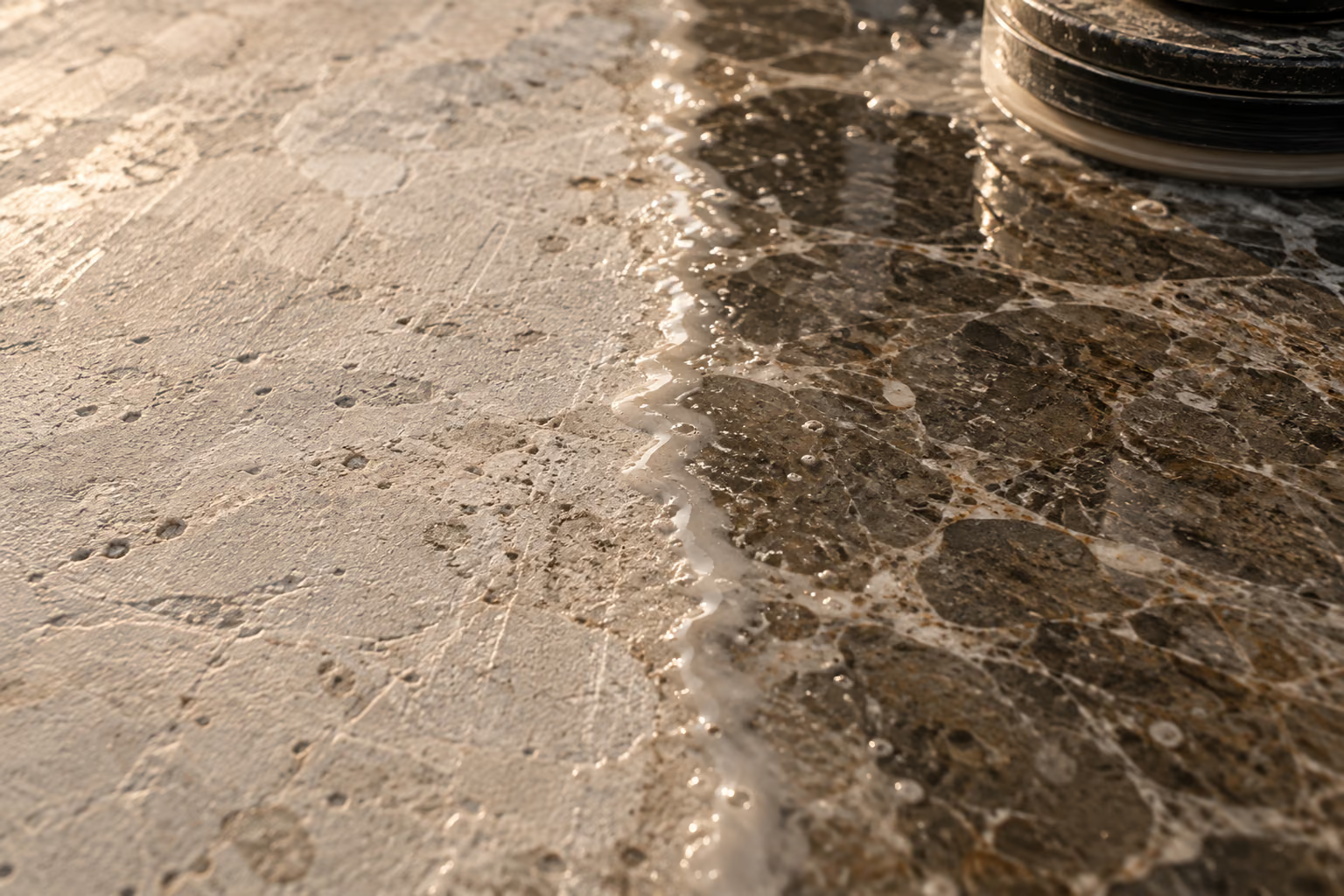
From block to finished piece
Blocks, slabs, tiles and finished cut-to-size — all supplied, all controlled from the same source. Dark stone is the family where the monolithic piece earns its price: a reception desk or a bar front cut from one block reads as a single object, and no amount of skilled jointing reproduces that.
Those pieces are planned at the block, before the saw, because the yield decides what is possible. Bring the drawing early and the answer is a design; bring it late and the answer is a compromise.
The material
A dense black ground crossed by white calcite that runs in irregular, unrepeating branches rather than parallel bands. Polished, the ground goes to a wet depth and the veining reads as bright drawing; honed, the black turns matte and the veins soften to grey — two materials inside the same slab, and the choice belongs to the room. Because the figure never repeats, black marble is specified by the slab and not by the square metre: we photograph and number the sequence, and the lot you approve is the lot that ships.
Applications
Statement walls, reception and bar fronts, stairs, vanity tops and bathroom surfaces, and interior floors where a maintenance regime is realistic. A black ground shows dust, water marks and etching more readily than any other stone here — that is the honest trade for its depth, and we would rather state it now than be asked about it later. Not for exterior paving, not for freeze-thaw exposure, and not for a kitchen worktop without sealing and an agreed routine behind it.
Technical documents
Supplied as blocks, 20, 30 and 40 mm slabs and cut-to-size to drawing, with heavier sections on request for monolithic pieces. Finish decides how the stone behaves in use: polished holds its depth on vertical surfaces, honed forgives handling on horizontal ones. Flexural and absorption data are issued per lot on request rather than published generically, because the figure that matters is the one measured on your block.
Tell us what you are building
A specialist reviews every request. You will hear from a person, not an autoresponder.