
Why ASTONESA
Direct access at source. Control through transformation. A record you can rely on.
Selection
We say no on your behalf
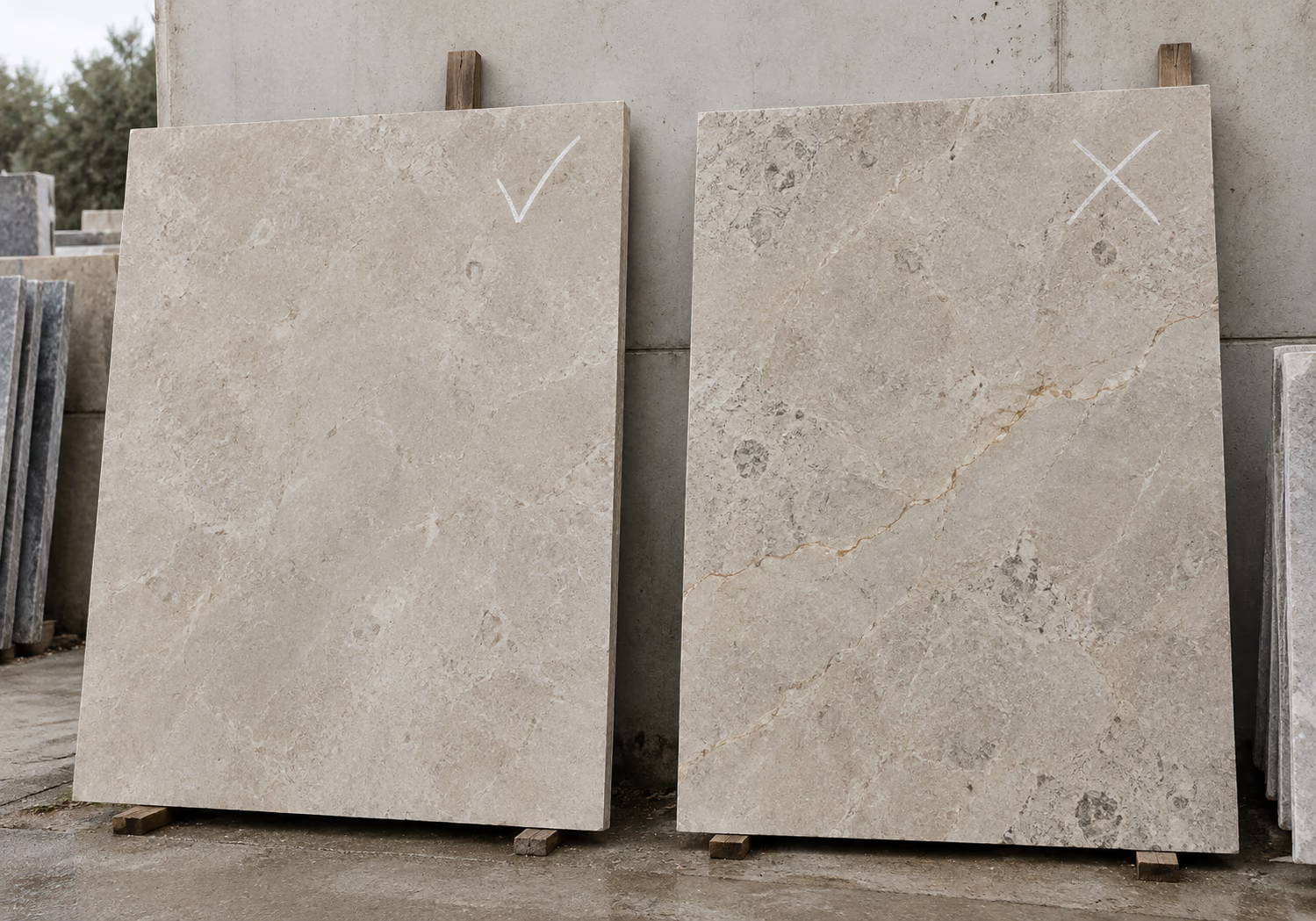
Most of what comes out of the ground should not go into a project. Selection is the part of this business that has no glamour and the most consequence: rejecting sound-looking material because the fracture pattern will not survive fabrication, or because the colour will not hold across the quantity you need.
The judgement is rarely dramatic. It is a fracture that will open on the saw, a tone that drifts by the fortieth slab, a vein that reads beautifully on one panel and chaotic across eight. None of it is visible in a sample, and all of it is visible in the finished building.
We would rather lose an order than supply a material into a use it will fail in. That is easier to say than to do, and it is the reason to work with us.
Access
Upstream, not intermediary
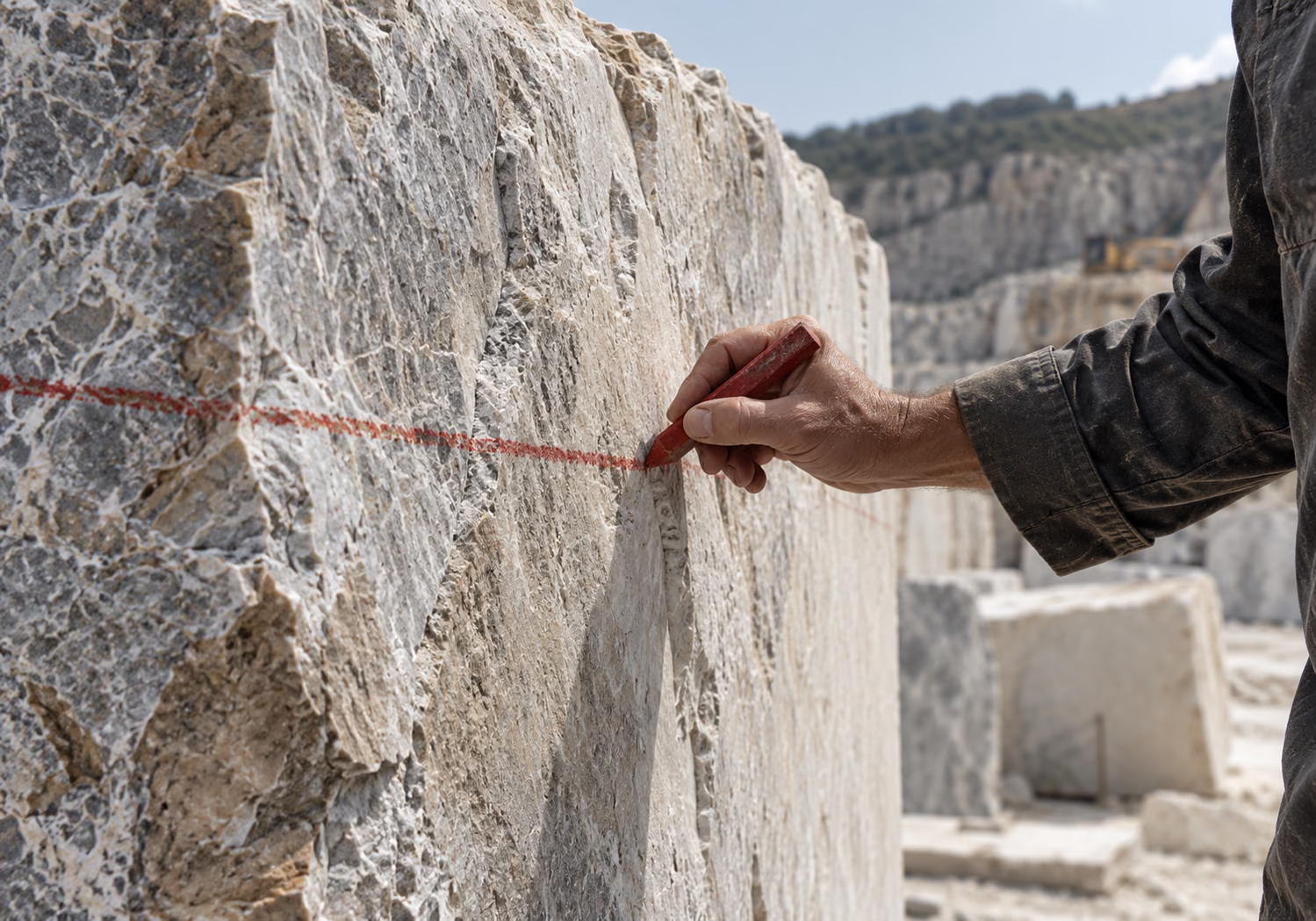
We work at the block rather than buying finished slabs on an open market. That gives control over cut direction, calibration, finish and reinforcement — the decisions that determine what a slab actually is.
It also means continuity: when a project needs the same material in a second phase eighteen months later, the conversation starts at the source rather than in a warehouse, where the only honest answer is whatever happens to be left.
An intermediary sells what they were able to buy. Working at the block, what you are offered is what was chosen — and the difference between those two sentences is most of what goes wrong on a stone package.
Confidentiality
Both directions
We do not publish the identity of the sites we work with. We also do not publish our clients, their projects, or their drawings.
Documents you send us — bills of quantities, drawings, specifications — are stored privately, access-controlled, and never used as marketing material. If we want to show a project, we ask first.
Stone with presence. Service with precision.
Accountability
A record, not an assurance
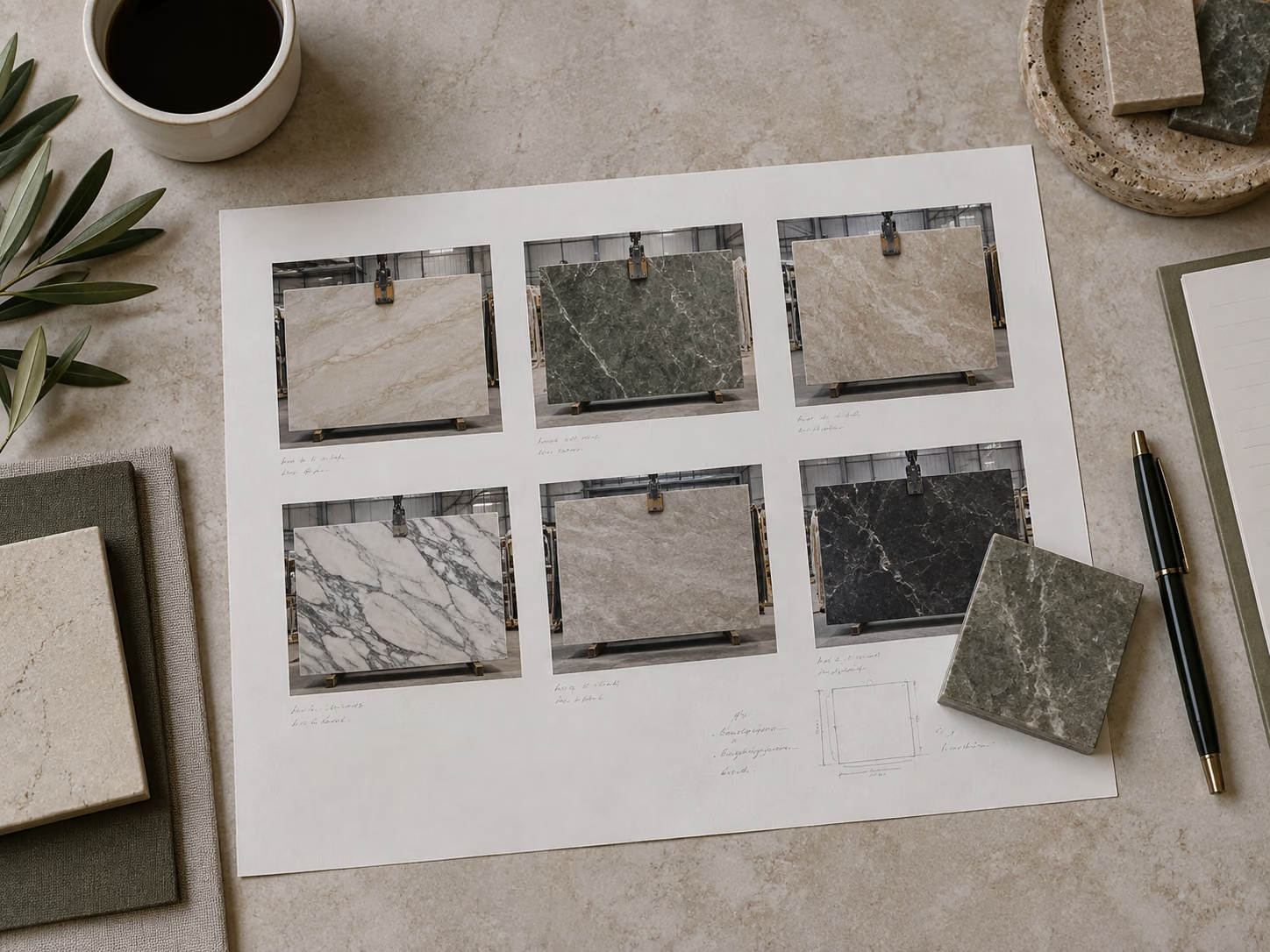
Any supplier can promise quality. The difference is whether there is a record when something goes wrong: which lot, inspected by whom, released on what basis, packed in which crate, on which container.
A promise is worth what the supplier’s memory is worth. A record is worth what it says — to you, and to a third party, eighteen months later, when the person who made the decision has moved on.
That record exists here because the operational system was built before the marketing was.
Questions
The questions worth asking any supplier
Are you a quarry, a processor or a trader?
We work upstream, at the block, and control the transformation from there to the container. We do not publish the identity of the sites we work with — that is a contractual position, it runs in both directions, and it holds regardless of who asks.
What happens when something goes wrong?
The lot identifier makes it answerable rather than arguable: which block, which inspection, released by whom, packed in which crate. A dispute becomes a fact to resolve instead of two recollections in conflict.
Why do you not show your clients’ projects?
Because we asked and they said no, or because we have not asked. Client projects, drawings and quantities are confidential by default and are never used as marketing material. If we would like to show a project, we ask first, in writing.
What is the smallest project you will take?
There is no published minimum, and the real constraint is not size but fit. A single statement wall from one block is straightforward. A large quantity needing tight variation control across phases is the harder problem — and the one this house is built for.
Request a Quote
Tell us what you are building
A specialist reviews every request. You will hear from a person, not an autoresponder.